
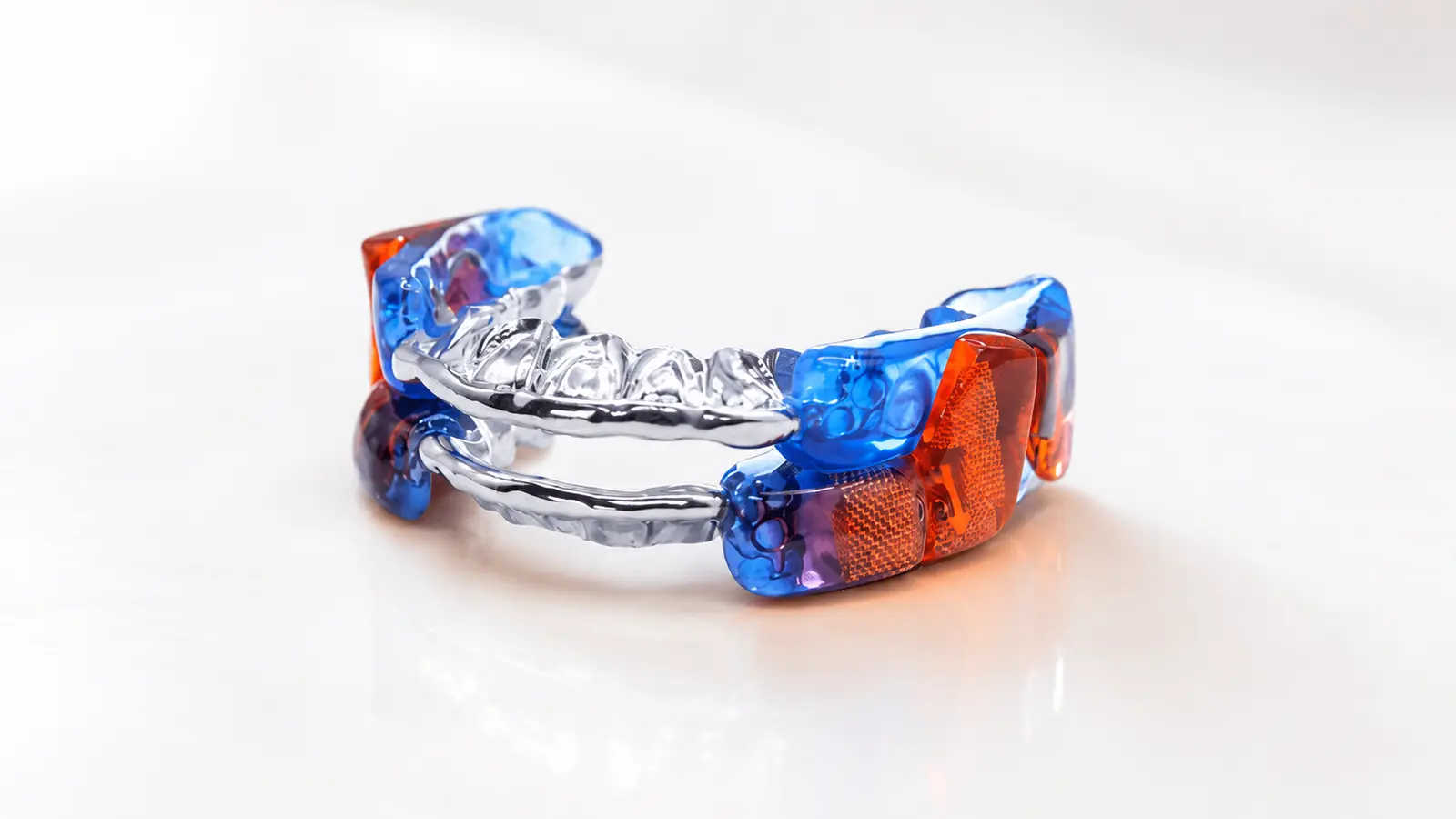
You want to treat your sleep apnea. You also want a treatment you can realistically sleep with.
Perhaps you have tried to get comfortable with a CPAP mask, but still find yourself taking it off during the night. Or perhaps you have recently been diagnosed and want to understand your options before starting treatment.
For adults with obstructive sleep apnea who cannot tolerate CPAP—or prefer an alternative after discussing their options—professional guidelines support considering custom oral appliance therapy.1
How does an oral appliance treat sleep apnea?
Obstructive sleep apnea happens when the upper airway repeatedly narrows or becomes blocked during sleep. An oral appliance helps address that obstruction by supporting the lower jaw in a forward position, helping keep the airway open.2
The appliance fits over your teeth and is worn while you sleep. It may look somewhat like an orthodontic retainer, but its purpose is different: it is designed to help improve breathing during sleep.3
Why do patients consider an oral appliance?
A custom oral appliance offers a different nighttime routine from CPAP. There is no mask or hose, and the appliance itself does not require electricity. It is compact, quiet, and easy to pack for travel.3 For someone who finds CPAP equipment difficult to sleep with, those differences can make oral appliance therapy appealing.
For appropriate patients, treatment can also reduce snoring and improve daytime alertness and quality of life. Individual results vary, and getting the fit and jaw position right is part of the treatment process.1
The goal is not simply to find a smaller device. It is to find a treatment that works for your sleep apnea and fits into your life. For a closer look at the tradeoffs, read our oral appliance vs. CPAP comparison.
Who may be a good candidate?
Oral appliance therapy is commonly considered for adults with obstructive sleep apnea, particularly when CPAP is not tolerated or an alternate therapy is preferred. Your sleep-study results, overall health, teeth, gums, and jaw function all matter when evaluating suitability.12
CPAP generally reduces breathing interruptions more completely and remains especially important for many patients with more severe disease. When CPAP is working well, there is no need to change simply because another option exists. Do not stop prescribed treatment without discussing a plan with your medical provider.1
What does treatment look like at Restful Sleep Center?
At Restful Sleep Center, the process involves more than fitting an appliance and sending you home.
Your medical provider establishes the sleep apnea diagnosis and guides your overall treatment. Dr. Dawson evaluates your teeth, gums, bite, and jaw joints to determine whether oral appliance therapy is appropriate from a dental standpoint. We coordinate with your medical team throughout treatment.
When an oral appliance is appropriate and prescribed, we fit a custom, adjustable device and explain how to wear and care for it. Follow-up appointments allow us to adjust the appliance, assess comfort, and address dental or jaw concerns.1
The fitting is the beginning of care—not the end.
Once the appliance has been adjusted, follow-up sleep testing is recommended to confirm how well it is treating your sleep apnea. Less snoring or feeling more rested can be encouraging, but those changes alone do not establish that your breathing is adequately controlled.1
What about comfort and side effects?
An oral appliance takes some getting used to. Possible side effects include jaw soreness, tooth discomfort, changes in saliva, or dry mouth. Longer-term changes in tooth position or the way your teeth fit together can also occur.2
Regular dental follow-up helps monitor these issues and allows adjustments when appropriate.1 Discomfort is something to discuss with your dentist rather than simply push through on your own.
Explore a CPAP alternative in Peoria, Arizona
Restful Sleep Center offers custom oral appliance therapy inside Dawson Dental in Peoria. A consultation gives you an opportunity to discuss your experience with CPAP, ask questions, and find out whether an oral appliance could be an appropriate next step.
You do not have to figure out your next step alone.
Dr. Dawson is a Member, American Academy of Dental Sleep Medicine. Learn about the AADSM.
Find your next step
If CPAP is difficult to use, explore our CPAP alternatives guide and candidacy questions. Have a sleep study? Read about medical insurance and oral appliance therapy. If you have not been tested, our Getting Started page explains the pathway.
Request a consultation or call (623) 566-1310 to discuss your next step with Restful Sleep Center.
References
- Ramar K, Dort LC, Katz SG, et al. Clinical Practice Guideline for the Treatment of Obstructive Sleep Apnea and Snoring With Oral Appliance Therapy: An Update for 2015. Journal of Clinical Sleep Medicine. 2015;11(7):773–827. View clinical practice guideline.
- American Dental Association. Sleep Apnea (Obstructive). ADA Oral Health Topics. American Dental Association resource.
- American Academy of Dental Sleep Medicine. Oral Appliance Therapy. AADSM patient information.
This article provides general education. Treatment recommendations depend on your diagnosis, medical history, and individual evaluation.